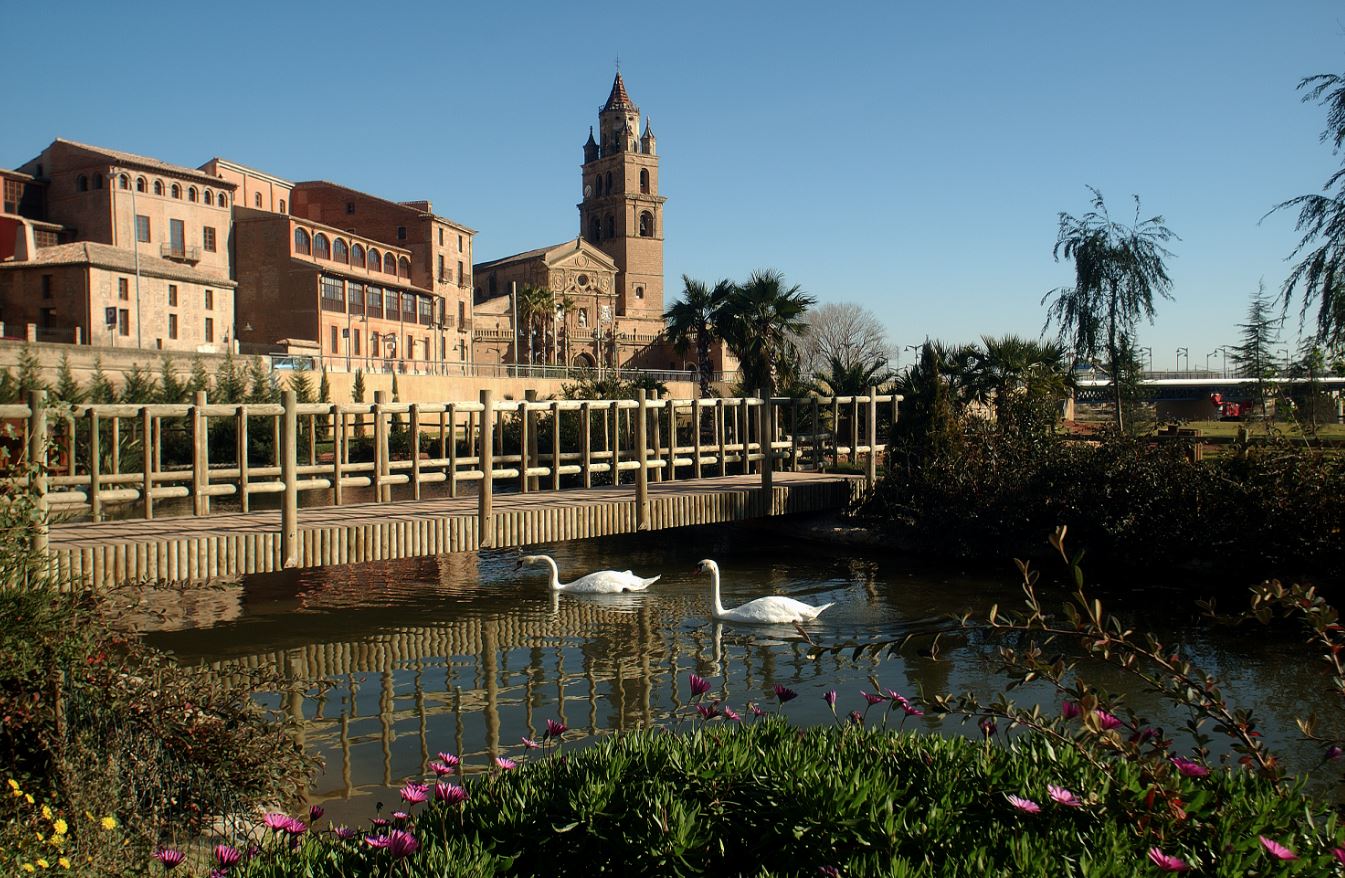
Calahorra is a city in La Rioja, located on the right bank of the River Ebro and at the final stretch of the River Cidacos, within the so-called Ebro depression.
Calahorra is the major socio-economic hub of La Rioja Baja and has seen its population increase in recent decades due to its thriving agricultural, industrial, and commercial activity. The city’s wealth is based on its developed agriculture and industry, as well as the significant growth of the tertiary sector. As a two-thousand-year-old city, it has evolved into the current Calahorra, showing the mark of different cultures throughout its development. It holds the title of ‘City of Vegetables’ due to the quality of its market gardens, an identity that generates numerous events, most notably the Vegetable Gastronomy Days.
In terms of heritage, Calahorra features the Cathedral of Santa María, the Church of San Andrés, and the Church of Santiago. It also hosts the Romanisation Museum and the Vegetable Museum, as well as various archaeological sites relating to the city’s Roman past.
Regarding nature tourism, it possesses numerous resources such as footpaths and routes, in addition to sites like the Perdiguero Reservoir, the La Degollada natural route, and the Cidacos Park.
| Admission to the Smart Tourism Destinations Programme |
Calahorra joined the Smart Tourism Destinations project through the drafting of the Diagnostic Report and Action Plan for its transformation into a Smart Tourism Destination, carried out in July 2023, and has renewed its distinction as an Adherent STD in March 2026. |
| Outstanding initiatives
|
-
A commitment to sustainability with actions initially promoted through interventions included in the Strategy for Sustainable and Integrated Urban Development (EDUSI); ‘Calahorra, two millennia of future’ programme. This is currently managed via the Integrated Action Plan (PAI) ‘CALAHORRA IMPULSA: Where the past inspires the future’ within the framework of sustainable urban development, funded by the Regional Development Fund in the 2021-2027 programming period, which aims to achieve the development of an inclusive, dynamic, safe, accessible, and digital city.
-
A commitment to energy efficiency and diversification. Renewal of outdoor lighting in various parts of the city through ERDF funds. The objective is the reduction of CO2 emissions and energy consumption.
-
Improving the tourism competitiveness of Calahorra by generating new experiences and integrating the local industry of Calahorra into them.
-
Enhancing the city’s natural heritage; restoration of fountains, creation of a Network of Footpaths, dissemination of resources, and their signposting, etc., through schemes such as the ‘Calahorra Food and Wine’ Tourism Sustainability Plan or the ‘Revive Cidacos’ project for the restoration of river ecosystems.
-
Recovery of artistic and especially archaeological heritage. Calahorra is a two-thousand-year-old city that must enhance these resources through study, the cataloguing of pieces, signposting, historical reenactments, etc.
|
Technical data
VAT number:
P1811600D Address: Gta. Quintiliano, 1 Postal code: 26500 Telephone: 941 10 50 50 Region: La Rioja Province:
La Rioja Population:
Calahorra Country:
España Local entity type: Ayuntamiento Date of membership:
20220530 Diagnosis: Sí Diagnosis date:
10/03/2026 Destination Type:
Rural de interior Population:
24,654 Area (km²):
93.57 Density (inhab/km²):
265.10
Level in the Network: Nivel 3