
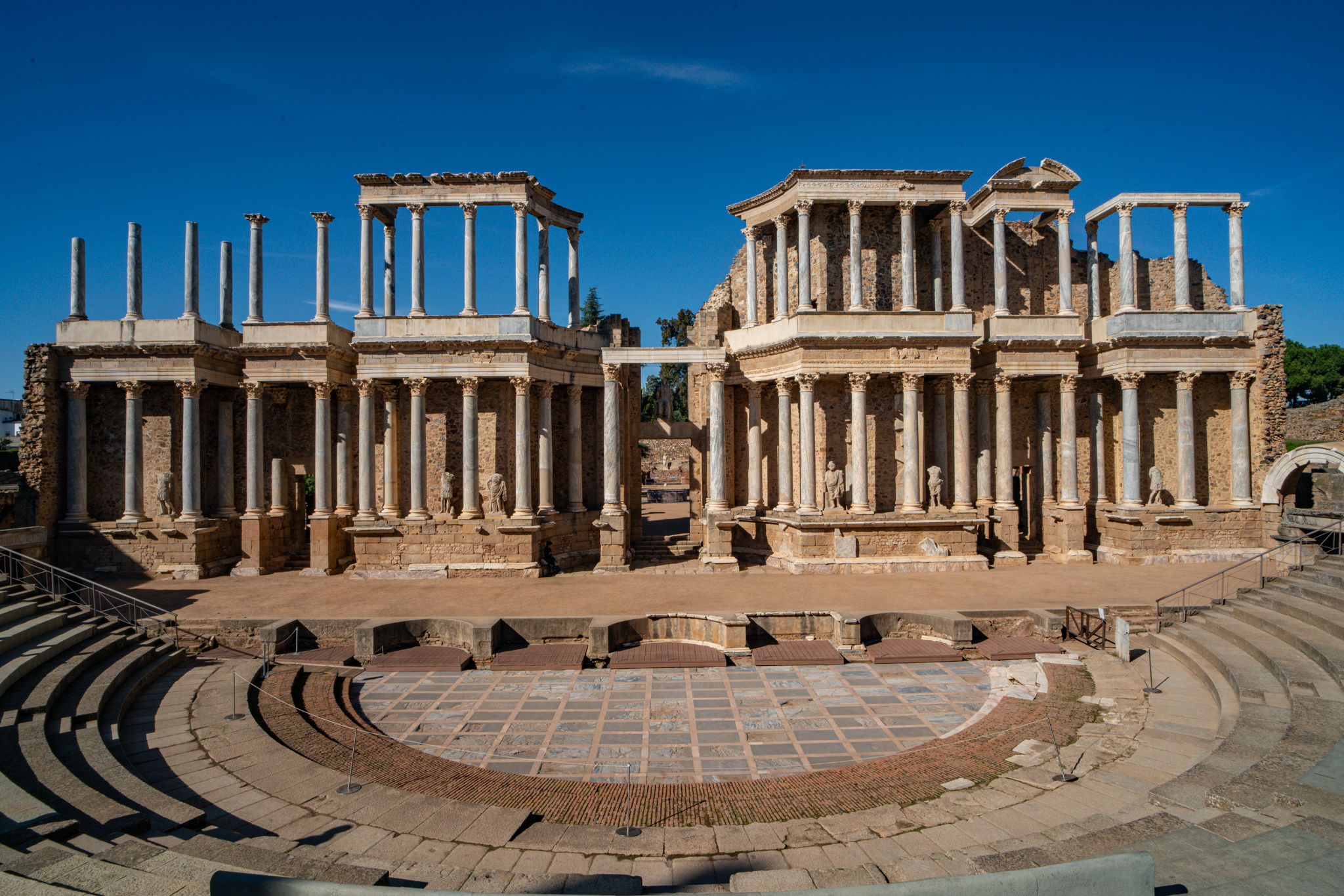
Mérida, the capital of Extremadura, is a city where history lives on. Founded in 25 BC as Emerita Augusta, it was one of the most important cities of the Roman Empire in Hispania and today boasts one of the best-preserved Roman archaeological sites in Europe, declared a World Heritage Site by UNESCO in 1993.
Its monumental legacy includes, among others, the Roman Theatre and Amphitheater, the Temple of Diana, the Roman Circus, the Roman Bridge over the Guadiana River, and the Aqueduct of Miracles—icons that coexist with a modern, accessible city. Mérida has nearly 60,000 inhabitants and offers an excellent quality of life, ample green spaces, and a full range of cultural and gastronomic offerings year-round.
The city is particularly renowned for its vibrant cultural scene. In addition to the prestigious International Classical Theatre Festival, Mérida hosts Emerita Lvdica every year, one of Spain’s most important Roman historical reenactments. During this event, the city transforms to relive its Roman past with markets, parades, performances, workshops, and activities for all ages, reinforcing its historical identity and tourist appeal.
Well-connected and strategically located between Madrid, Seville, and Lisbon, Mérida is an ideal destination for those seeking heritage, culture, and a unique experience in an authentic and welcoming setting.
| Joining the Smart Destinations project | Mérida joined the Smart Tourist Destinations project in 2020, and in 2021 the first diagnostic assessment was carried out, culminating in the delivery of the Diagnostic Report and Action Plan for its transformation into a Smart Tourist Destination. The diagnostic process for renewing its status as an Adherent Smart Tourist Destination was completed in 2025. |
| Outstanding Initiatives
|
– Mérida, a UNESCO World Heritage city renowned for its valuable archaeological sites, promotes cultural and heritage tourism.
– It boasts a wide array of events and festivals that keep its history alive, such as Emerita Ludica, which introduces residents and visitors to the Roman world and its way of life. |
