
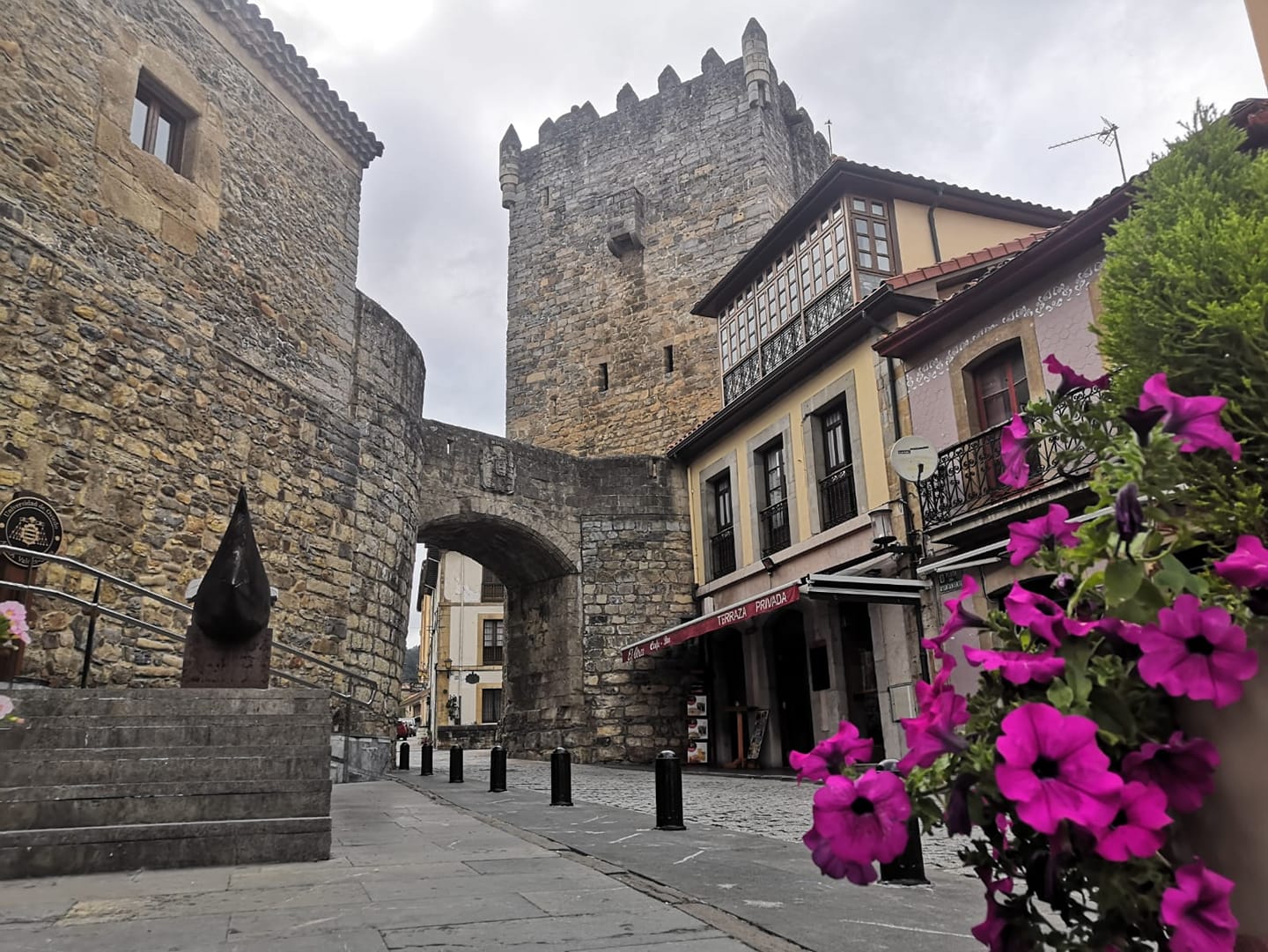
The council of Salas is located in the central-western part of Asturias, midway between the main Asturian cities, the Cantabrian coast, and surrounded by mountains. It is known as “the Gateway to Western Asturias.” It has a population of around 5,000 inhabitants, divided into three urban centers (Salas, Cornellana, and La Espina) and distributed across 28 parishes.
This council offers one of the most varied and unique landscapes in Asturias, with the wide plains of the Narcea River—an outstanding salmon river in northern Spain—where the parish of Cornellana stands as the salmon capital of Spain.
It stands out for its strong connection to the vaqueira culture. Salas is a land of vaqueiros de alzada, transhumant shepherds whose lives unfolded between coastal brañas and mountain pastures, with areas such as Buspol and El Pevidal.
Another of its attractions is the parish of Malleza, a picturesque village of colonial architecture known as “Little Havana” due to its magnificent indiano houses and for being a summer retreat for the indiano bourgeoisie in the early 20th century.
In addition, the town of Salas possesses one of the most important Historic-Artistic Complexes in all of Asturias, housing four National Monuments. It has a long history: hillfort settlements, pre-Romanesque Asturian archaeological pieces from the Church of San Martín, and spectacular Romanesque examples such as the Monastery of San Salvador de Cornellana, declared a World Heritage Site. There are also Renaissance works such as the mausoleum created by the sculptor Pompeo Leoni for the Inquisitor General and founder of the University of Oviedo, Fernando de Valdés Salas.
Salas is an official stage of the Primitive Way to Santiago. Its natural landscape and excellent gastronomy invite visitors to enjoy its traditions and cultural values.
| Incorporation into the Smart Tourism Destinations Project | Start of the diagnostic process and action plan for Salas in 2025, with completion in April 2026. |
| Key initiatives
|
|
